Malawi risks forfeiting the demographic dividend by its youth unless it tackles low productivity, delayed participation in economic activity and high dependency among young people, an academic has warned.
Lilongwe University of Agriculture and Natural Resources (Luanar) Professor Kennedy Machira made the observation on Wednesday at Luanar Bunda Campus in Lilongwe during his inaugural lecture titled ‘Demographic change and its effect towards economic development: A realisation pathway for a sustained human welfare in Malawi’.
Drawing on a series of studies on demographic change, agricultural productivity and household welfare, the professor of agriculture and applied economics argued that “Malawi’s youthful population should provide the labour necessary to accelerate economic growth, but much of that potential remains underutilised”.

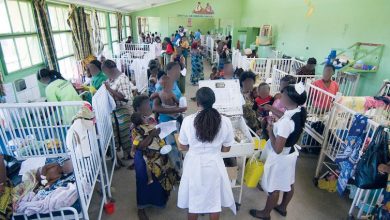
on their famililies. | Eric Mtemang’ombe
He defined the economically active population as people aged 15 to 59, who should constitute the country’s productive workforce.
“Younger farmers are generally less productive than their older counterparts while many young people remain dependent on their families instead of participating fully in economic activity,” said Machira.
The findings mirror the World Bank’s Malawi Economic Monitor published last week, which found that formal wage employment covers less than four percent of people aged 15 to 24 despite youth literacy approaching 90 percent.
The report further shows that the proportion of young workers relying on ganyu, or casual labour, increased from 21.3 percent in 2019/20 to 27.6 percent in 2024/25, suggesting that improvements in education are not translating into higher-return employment.
Machira called for greater intergenerational transfer of skills, particularly in agriculture, arguing that experienced and more productive farmers should mentor younger people to improve their efficiency.
He also challenged young Malawians to make greater productive use of digital technology, including creating platforms to market agricultural products locally and internationally rather than predominantly using technology for social interaction.
The challenge is particularly significant because Malawi’s economy is barely growing faster than its population.
The World Bank projects gross domestic product growth of 2.7 percent this year against annual population growth of about 2.6 percent, a pace it says remains insufficient to significantly reduce poverty.
Speaking at the same event, Agra Malawi country director Eluphy Banda-Nyirenda agreed that the country’s youthful population will only become an economic advantage if young people were educated, skilled, innovative and productively employed.
She cautioned that expanding university enrolment alone will not solve the problem.
“Enrolling more young people at this university or any university in Malawi alone does not create opportunities,” said Nyirenda, challenging universities to move research beyond academic publication into products, services and enterprises that can create employment.
She said government must invest in research while businesses should open markets, mentor innovators and invest in viable technologies, with financial institutions providing appropriate financing.
In his lecture, Machira recommended youth incubation programmes, stronger links between universities and farming communities and greater integration of technology into agriculture.
He warned that without deliberately turning the country’s large youthful population into a productive workforce, Malawi could continue experiencing weak economic growth and stagnant welfare despite possessing a potentially favourable demographic structure.